Evaluating the Little Blue Folio – Junk Journal Kit for Digital Crafters
The resurgence of analog creativity in a digital age has created a unique niche for hybrid crafting tools. Among these, printable digital kits have become essential resources for artists who value both aesthetic consistency and workflow efficiency. The Little Blue Folio – Junk Journal Kit represents a focused entry into this market, offering a curated collection of assets designed specifically for constructing interactive folio journals. For creators ranging from seasoned scrapbookers to entrepreneurs selling handmade goods, understanding the practical utility of such a kit is crucial before integrating it into their creative pipeline.
This analysis examines the components, design philosophy, and real-world application of the Little Blue Folio. It moves beyond surface-level descriptions to evaluate how this specific asset performs when subjected to the demands of actual paper crafting, considering factors like print quality, assembly complexity, and versatility.
Design Aesthetic and Visual Cohesion
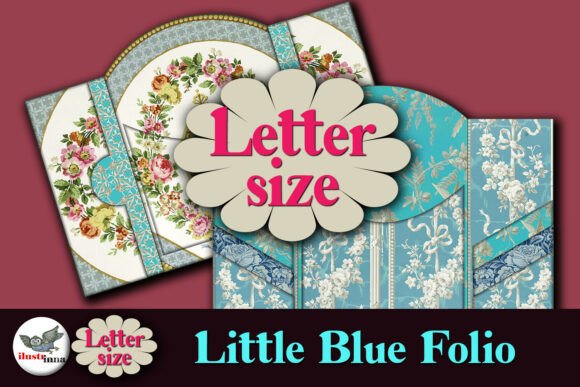
The primary appeal of any junk journal kit lies in its visual language. The Little Blue Folio adopts a distinct pastel blue theme, anchored by vintage-style floral patterns and romantic motifs. This is not merely a color choice but a strategic design decision that targets a specific emotional response: calmness, nostalgia, and elegance. For marketers and content creators, recognizing this thematic consistency is vital. A cohesive palette reduces the cognitive load on the viewer, allowing the intricate details of the journaling content to take center stage.
The kit includes 12 high-resolution JPG pages, formatted for Letter size paper. This standardization ensures compatibility with most home printers and professional printing services. The resolution is sufficient to capture the subtle textures of the vintage paper effects, which is critical for maintaining the illusion of aged, authentic materials. When printed on quality cardstock, the digital files translate effectively into tangible artifacts, preserving the delicate nuances of the floral trims and background patterns.
However, the strength of this kit is not just in its backgrounds but in its coordinated elements. The inclusion of matching pockets, folio structures, and decorative tags means that users do not need to spend hours sourcing complementary ephemera. This level of curation saves time and ensures that the final product looks professionally designed rather than haphazardly assembled.
Functional Components and Structural Integrity
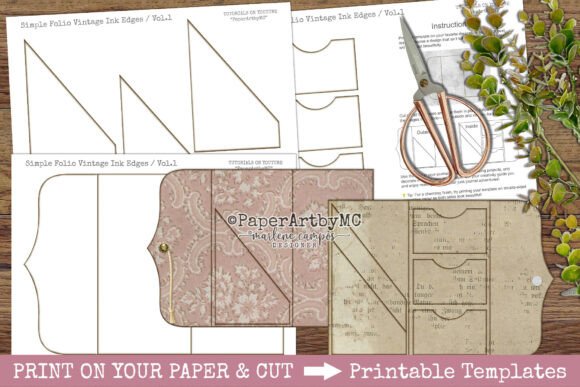
While aesthetics draw users in, functionality keeps them engaged. The Little Blue Folio – Junk Journal Kit is engineered for interactivity. It provides ready-to-cut components for both the interior and exterior of the folio. This structural completeness is a significant advantage for beginners who may struggle with the engineering aspects of bookbinding and folder construction.
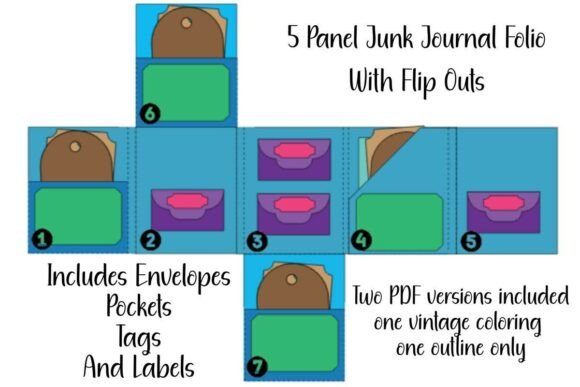
- Folio Base: The core structure allows for a layered approach, providing ample space for photos, notes, and memorabilia.
- Pockets and Flaps: These elements add dimension and surprise, encouraging the user to interact physically with the journal.
- Decorative Tags and Trims: These serve both functional and ornamental purposes, acting as pull-tabs for hidden compartments or as standalone decorative accents.
The practical value here lies in the modularity. Users can choose to assemble the folio exactly as designed or deconstruct the elements to use individually in other projects. For educators or workshop leaders, this flexibility allows for differentiated instruction, where participants can tackle simple tagging projects or complex multi-layered folios depending on their skill level.
Workflow Efficiency and Usability
For professionals and freelancers, time is a non-renewable resource. The digital nature of the Little Blue Folio offers immediate access, eliminating shipping delays and inventory management issues. Once downloaded, the files are available for unlimited personal use, making this a cost-effective solution for repeated projects. However, usability extends beyond file access to the ease of preparation.
The files are provided in JPG format, which is universally compatible but lacks the layering capabilities of PSD or PNG files. For users who wish to customize colors or remove specific elements before printing, this may present a limitation. Advanced digital artists might prefer editable formats, but for the target audience of papercraft enthusiasts who intend to print and cut, JPGs are straightforward and reliable. The key is ensuring that the printer settings are optimized for high-quality image reproduction to avoid pixelation or color banding.
Cutting precision is another factor. The kit assumes a certain level of manual dexterity or access to cutting machines. While the designs are elegant, the intricate floral trims require careful handling. Users with electronic cutting machines (such as Cricut or Silhouette) will find the process significantly faster and more precise than those relying solely on scissors and craft knives. This distinction is important for small business owners who may need to produce multiple units for sale.
Target Audience and Ideal Use Cases
Who benefits most from the Little Blue Folio – Junk Journal Kit? The answer spans several demographics, each with distinct goals.
- Hobbyists and Journalers: Individuals seeking a structured yet creative outlet for memory keeping. The pre-designed layout removes the intimidation of starting from a blank page.
- Small Business Owners: Makers who sell handmade journals on platforms like Etsy. This kit provides a professional base that can be customized with unique embellishments, allowing for scalable production without sacrificing quality.
- Educators and Therapists: Professionals using art therapy or creative writing exercises. The calming blue theme and tactile nature of the folio can support mindfulness practices and emotional expression.
- Gift Givers: Those looking to create personalized, high-effort gifts. The interactive nature of the folio makes it a memorable present for weddings, anniversaries, or birthdays.
In each scenario, the kit serves as a foundation. It is not a finished product but a toolkit that invites personalization. This balance between structure and freedom is what makes it valuable. It provides enough guidance to ensure a polished result while leaving room for individual creativity.
Limitations and Practical Considerations
No resource is without its constraints. It is important to address the limitations of the Little Blue Folio – Junk Journal Kit to provide a balanced perspective. First, the reliance on digital printing means that the final output is heavily dependent on the user’s printer quality and paper choice. Inkjet printers may struggle with heavy cardstock, leading to smudging, while laser printers offer sharper lines but may lack the depth of color saturation found in professional offset printing. Users must experiment with their equipment to achieve optimal results.
Second, the vintage aesthetic, while charming, may not suit all tastes or project themes. Those preferring modern, minimalist, or bold contemporary styles may find the floral motifs and pastel tones too restrictive. However, this is less a flaw and more a matter of stylistic alignment. Creators should assess whether the kit’s vibe aligns with their brand or personal preference before purchase.
Finally, the learning curve for assembling interactive folios should not be underestimated. While the kit provides the pieces, it does not necessarily include detailed video tutorials or step-by-step assembly guides. Users new to junk journaling may need to seek external resources to understand folding techniques, adhesive selection, and binding methods. This requirement for supplementary knowledge could be a barrier for absolute beginners.
Long-Term Value and Creative Potential
When evaluating the long-term value of the Little Blue Folio – Junk Journal Kit, consider its reusability. Unlike physical kits that are consumed upon use, digital files can be archived and revisited. A single purchase can yield multiple journals, allowing for experimentation with different paper stocks, inks, and embellishments. This repeatability enhances the return on investment, particularly for prolific crafters.
Moreover, the kit serves as an educational tool. By dissecting the design—observing how pockets are constructed, how layers interact, and how color theory is applied—users can learn principles of book arts that they can apply to future independent projects. It acts as a scaffold, supporting skill development until the creator feels confident designing their own layouts from scratch.
In conclusion, the Little Blue Folio – Junk Journal Kit is a well-curated resource that balances aesthetic beauty with functional design. It is best suited for individuals who appreciate vintage-inspired aesthetics and are willing to invest time in the tactile process of assembly. While it requires attention to detail in printing and construction, the resulting folio offers a satisfying blend of nostalgia and interactivity. For those looking to streamline their creative workflow without sacrificing artistic integrity, this kit provides a reliable and elegant solution.